
Emotional wellbeing is the foundation of a balanced, meaningful, and healthy life. It shapes how we think, feel, and act in daily situations. It affects how we handle stress, build relationships, make decisions, and recover from challenges. At Calm Minds Hub, Emotional wellbeing is not seen as something you either have or do not have. It is a set of learnable skills that can be strengthened over time with understanding, practice, and kindness toward yourself.
In today’s fast-paced world, emotional wellbeing is often tested by academic pressure, work demands, family responsibilities, social expectations, and constant digital stimulation. Many people feel overwhelmed, anxious, or emotionally drained without fully understanding why. This article explains emotional wellbeing in clear, practical terms and teaches skills that help build resilience and inner peace. The goal is to make emotional wellbeing knowledge simple, evidence-based, and easy to apply in real life.
Understanding Emotional Wellbeing and Why It Matters
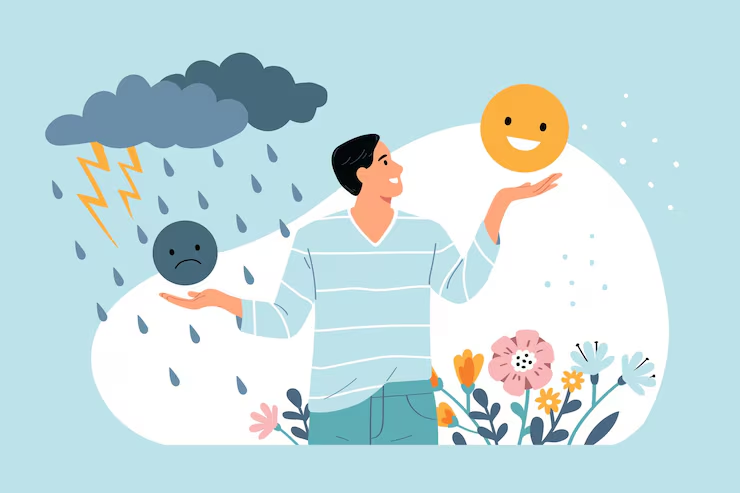
Emotional wellbeing refers to the ability to understand, manage, and express emotions in healthy ways. It does not mean being happy all the time or avoiding negative feelings. Instead, emotional wellbeing means being able to experience emotions fully while responding to them in balanced and constructive ways.
People with strong emotional wellbeing can cope with stress, adapt to change, and recover from setbacks more effectively. They are better able to maintain healthy relationships, focus on goals, and enjoy daily life. Emotional wellbeing also supports physical health, learning ability, and long-term mental stability.
Emotional Wellbeing vs Temporary Happiness
Many people confuse emotional wellbeing with happiness. Happiness is a temporary emotional state, while emotional wellbeing is a long-term skill set.
For example, imagine emotional wellbeing as a strong boat and emotions as waves in the ocean. Waves may rise and fall, sometimes becoming rough. A strong boat does not stop waves from forming, but it helps you stay afloat and move forward safely. Emotional wellbeing works the same way. It helps you handle emotional ups and downs without being overwhelmed.
How Emotional Wellbeing Affects Daily Life
Emotional wellbeing influences everyday experiences in many ways.
It affects how you react to criticism, how you manage conflict, how you respond to failure, and how you treat yourself during difficult times. Poor emotional wellbeing may lead to constant worry, emotional outbursts, withdrawal, or self-criticism. Strong emotional wellbeing allows calm responses, self-awareness, and thoughtful problem-solving.
The Science Behind Emotional Wellbeing
Research in psychology and neuroscience shows that emotional wellbeing is linked to brain function, nervous system balance, and learned behaviors. Emotional responses are shaped by the amygdala, which detects threats, and the prefrontal cortex, which helps regulate emotions and decision-making.
When emotional wellbeing skills are practiced regularly, the brain becomes better at calming stress responses. This process is known as neuroplasticity. It means the brain can change and strengthen emotional regulation over time.
Evidence-based practices such as mindfulness, emotional labeling, and cognitive reframing are proven to improve emotional wellbeing by reducing anxiety and improving resilience.
Core Emotional Wellbeing Skills for Resilience
Resilience is the ability to bounce back after challenges. Emotional wellbeing and resilience are closely connected. The following skills form the foundation of strong emotional wellbeing and lasting inner peace.
Emotional Awareness as the First Step
Emotional awareness means noticing and naming emotions without judgment. Many people suppress emotions or react automatically without understanding what they are feeling.
Developing emotional awareness involves paying attention to physical sensations, thoughts, and emotional patterns.
Examples of emotional awareness include recognizing tension in the shoulders during stress, noticing racing thoughts during anxiety, or identifying sadness beneath anger.
Simple emotional awareness practices include:
- Pausing to ask yourself what emotion you are experiencing
- Naming emotions using clear words like frustrated, worried, hopeful, or disappointed
- Observing emotions as temporary experiences rather than permanent states
Emotional wellbeing improves when emotions are acknowledged instead of ignored.
Emotional Regulation Skills for Calm Responses
Emotional regulation is the ability to manage emotional reactions in healthy ways. It does not mean suppressing feelings. It means responding thoughtfully rather than reacting impulsively.
One effective emotional regulation technique is controlled breathing. Slow, deep breathing sends calming signals to the nervous system.
Another technique is emotional pause. This involves creating space between feeling an emotion and acting on it.
For example, if you feel angry during an argument, emotional regulation allows you to pause, breathe, and choose words carefully instead of shouting.
Emotional wellbeing grows when regulation skills are practiced consistently.
Building Emotional Resilience Through Thought Patterns
Thoughts strongly influence emotions. Negative thought patterns can weaken emotional wellbeing and increase anxiety.
Cognitive reframing is an evidence-based skill that helps replace unhelpful thoughts with balanced ones.
For example, the thought “I always fail” can be reframed as “I faced a setback, but I can learn from it.”
Healthy thought patterns support emotional wellbeing by reducing fear and increasing confidence.
Helpful reframing strategies include:
- Challenging extreme thoughts
- Looking for evidence rather than assumptions
- Practicing self-compassion in inner dialogue
Self-Compassion and Emotional Wellbeing
Self-compassion is treating yourself with kindness during difficult moments. Many people are harsh on themselves when they make mistakes, which damages emotional wellbeing.
Self-compassion involves three main elements: kindness, shared humanity, and mindfulness.
Kindness means speaking to yourself gently. Shared humanity means recognizing that everyone struggles at times. Mindfulness means observing emotions without judgment.
A real-life example is a student who fails an exam. Without self-compassion, the student may feel shame and hopelessness. With self-compassion, the student acknowledges disappointment while encouraging improvement.
Emotional wellbeing improves when self-compassion replaces self-criticism.
Emotional Wellbeing and Stress Management
Stress is a natural part of life, but chronic stress harms emotional wellbeing. Effective stress management skills help protect inner peace.
Healthy stress management strategies include:
- Creating structured daily routines
- Setting realistic goals
- Taking regular breaks
- Engaging in physical activity
Physical movement releases tension and supports emotional balance. Even short walks or stretching can improve emotional wellbeing.
Sleep also plays a major role. Poor sleep increases emotional sensitivity and reduces coping ability.
Mindfulness Practices for Inner Peace
Mindfulness is the practice of paying attention to the present moment with openness and acceptance. It is a powerful tool for emotional wellbeing.
Mindfulness helps reduce overthinking, worry, and emotional reactivity. It trains the mind to observe thoughts rather than becoming trapped in them.
Simple mindfulness practices include:
- Focusing on breathing for a few minutes
- Paying attention to sensations while eating or walking
- Observing thoughts without engaging in them
A useful analogy is watching clouds pass in the sky. Thoughts and emotions come and go, but you remain grounded.
Regular mindfulness practice strengthens emotional wellbeing and supports inner peace.
Emotional Wellbeing in Relationships
Healthy relationships are essential for emotional wellbeing. Communication skills, boundaries, and empathy play major roles.
Emotional wellbeing improves when individuals can express feelings clearly and listen without judgment.
Important relationship skills include:
- Using calm and respectful language
- Expressing needs without blame
- Setting boundaries to protect emotional energy
For example, learning to say no respectfully prevents burnout and resentment.
Strong emotional wellbeing helps people form supportive and meaningful connections.
Emotional Wellbeing During Life Changes
Life changes such as exams, career shifts, relocation, or relationship changes can challenge emotional wellbeing.
During transitions, emotions may feel intense and unpredictable. Emotional wellbeing skills help manage uncertainty.
Helpful strategies include maintaining routines, seeking support, and focusing on controllable actions.
Viewing change as a process rather than a threat builds resilience and emotional stability.
Daily Habits That Strengthen Emotional Wellbeing
Small daily habits have a powerful impact on emotional wellbeing over time.
Consistent habits that support emotional health include:
- Journaling emotions and reflections
- Practicing gratitude daily
- Limiting excessive screen time
- Spending time in nature
Journaling helps process emotions and identify patterns. Gratitude shifts focus toward positive experiences, improving emotional balance.
Emotional wellbeing is strengthened through regular, intentional self-care practices.
Emotional Wellbeing and Purpose
A sense of purpose enhances emotional wellbeing by providing meaning and direction. Purpose does not have to be grand. It can involve helping others, learning new skills, or contributing to personal growth.
People with purpose experience higher resilience during challenges. Purpose acts as an emotional anchor during uncertainty.
Reflecting on values and goals supports emotional wellbeing and inner peace.
Overcoming Emotional Setbacks
Setbacks are unavoidable, but emotional wellbeing determines recovery speed.
Emotional setbacks may include failure, rejection, or loss. Resilient responses involve acceptance, learning, and gradual rebuilding.
A useful example is emotional recovery after disappointment. Instead of avoidance, emotional wellbeing encourages reflection and problem-solving.
Setbacks become opportunities for growth when emotional skills are applied.
Emotional Wellbeing Across Different Life Stages
Emotional wellbeing evolves across childhood, adolescence, adulthood, and later life.
Teenagers may face emotional challenges related to identity and peer pressure. Adults may experience work stress and relationship responsibilities. Older adults may face changes in health or routine.
At every stage, emotional wellbeing skills remain essential. Adaptability, self-awareness, and connection support emotional balance across the lifespan.
Creating a Supportive Environment for Emotional Wellbeing
Environment influences emotional wellbeing significantly. Supportive surroundings promote calm and clarity.
Creating a supportive environment may include organizing living spaces, reducing noise, and maintaining healthy routines.
Social environments also matter. Surrounding yourself with understanding and respectful individuals strengthens emotional wellbeing.
Seeking professional support when needed is also a sign of emotional strength, not weakness.
Emotional Wellbeing and Healing Relationships
Unresolved emotional wounds can affect emotional wellbeing deeply. Healing relationships with others and with oneself is essential.
This may involve forgiveness, boundary setting, or open communication. Healing does not mean forgetting pain. It means releasing emotional burden.
Therapeutic approaches and guided self-reflection support emotional wellbeing during healing processes.
The Role of Calm Minds Hub in Emotional Wellbeing
Calm Minds Hub exists to provide reliable, evidence-based guidance on emotional wellbeing. The focus is on simplifying complex mental health knowledge and making it practical for everyday use.
Through education, compassion, and understanding, emotional wellbeing becomes accessible to everyone.
Strong Conclusion: Building Emotional Wellbeing for a Peaceful Life
Emotional wellbeing is not a destination but a lifelong journey. It is built through daily choices, self-awareness, and intentional practice. By developing emotional awareness, regulation skills, self-compassion, and resilience, individuals can face life’s challenges with confidence and calm.
Inner peace does not mean a life without stress. It means having the emotional wellbeing skills to respond wisely when stress appears. With patience and practice, emotional wellbeing strengthens, resilience grows, and inner peace becomes more achievable.
Calm Minds Hub stands with you in this journey, offering guidance rooted in kindness, science, and hope. Whether you’re a beginner or an expert, start from our homepage for best results.
FAQs
What is emotional wellbeing and why is it important?
Emotional wellbeing refers to the ability to understand, manage, and express emotions in healthy ways. It is important because it supports mental stability, stress management, healthy relationships, and overall life satisfaction.
How can emotional wellbeing be improved daily?
Emotional wellbeing can be improved through simple daily habits such as emotional awareness, mindfulness, physical activity, journaling, healthy sleep routines, and practicing self-compassion consistently.
Can emotional wellbeing skills help reduce anxiety?
Yes, emotional wellbeing skills such as emotional regulation, thought reframing, and mindfulness are evidence-based methods that help reduce anxiety by calming the nervous system and improving emotional control.