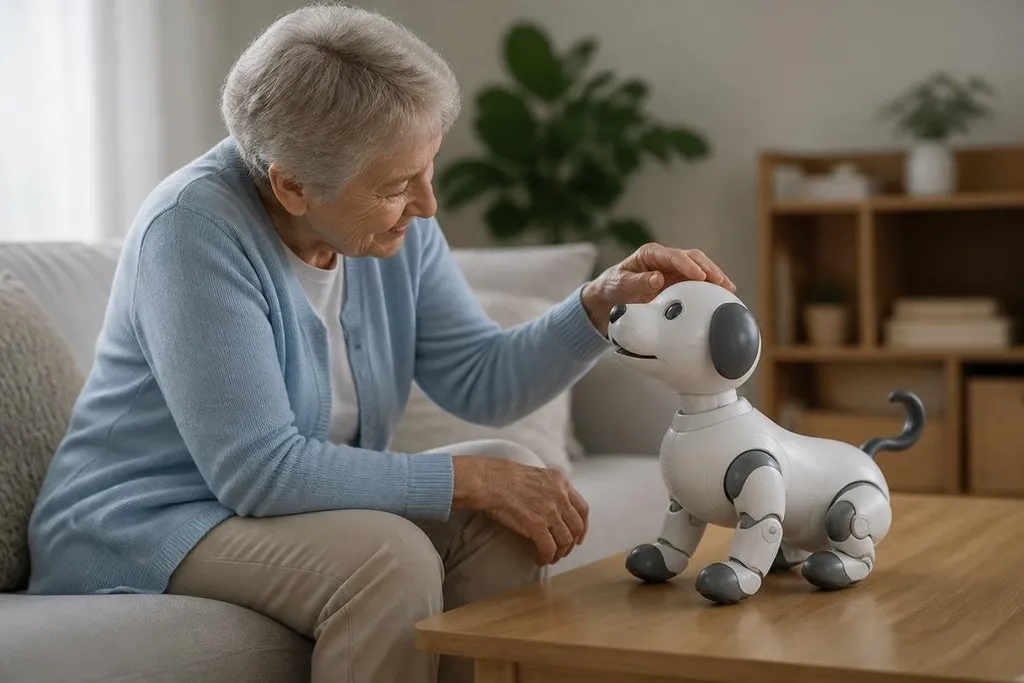
Robot pets can respond to touch, movement, sound, and commands without food, walks, or a litter tray. That makes them easier to keep than a living animal, but their value depends on what you want from a pet.
Quick read
- Robot pets suit homes that need interaction without daily animal care.
- Sensors and software can create play, movement, and simple responses.
- They don't replace the comfort, care, or unpredictability of a living animal.
What robot pets can do
A robot pet uses sensors to detect nearby objects, touch, sound, or changes in its position. Software then turns those signals into actions, such as moving toward a person, making a sound, changing its eyes, or repeating a learned response.
That response gives the owner something to do. You can issue commands, touch the robot, charge it, or set up a play routine. For a child learning about programming, the pet may also make coding feel less abstract because a change in code leads to movement on the floor.
Robot pets can fit homes where a living animal would cause problems. They don't shed fur, spread dander, need outdoor access, or require someone to arrange feeding during a short trip. They may also suit a person who likes interactive objects but can't take on years of animal care.
The social effect needs careful wording. A robot can answer a voice or react to touch, yet that reaction comes from programmed behavior. It can create a routine around interaction, but it doesn't feel affection or understand a person's situation.
The main risks
The first risk is emotional confusion. A robot pet may act as if it recognizes you, but recognition here means a sensor or software rule detected a pattern. A child may still form an attachment, which makes the device harder to treat as an ordinary toy when it breaks or stops working.
Privacy is another concern. A robot with microphones, cameras, or a network connection may collect information from inside the home. Before buying one, check what data it records, where that data goes, how long the maker keeps it, and whether the robot still works when the network is off.
An unpatched robot pet can expose more than its own camera feed. If the maker stops sending security fixes, an old software flaw may give someone a route into your home network. Reports at Robot24 can name the maker and model behind a security problem, so you can ask how long updates last and what still works when the network is off.
There are practical limits, too. Batteries need charging. Motors wear out. A small robot can become a trip hazard on stairs, while a larger one may damage furniture or frighten a young child. Replacement parts and software support may disappear before the robot itself wears out.
The cost can also spread beyond the purchase. You may need a charging dock, a paid service, replacement batteries, or a new app when the maker changes its system. A lower purchase price doesn't tell you what ownership costs over several years.
Who should buy one
A robot pet makes sense when you want programmed interaction and low daily care. It works best as a device with a social interface, not as a substitute for an animal or a person.
I'd choose a robot pet only when its offline behavior, repair options, and data settings are clear. If those details are missing, the device asks you to trust the maker with too much of your home life.
That concern is stronger for children, older adults, or anyone who may mistake a scripted response for real attention. A robot can support a routine, but it shouldn't become the only source of company or care.
Buying checklist
Use these checks before you pay:
- List the sensors: identify cameras, microphones, motion sensors, and touch sensors.
- Check offline use: confirm which functions remain available without Wi-Fi.
- Read the data policy: find the rules for storage, deletion, and third-party access.
- Price the upkeep: include batteries, repairs, subscriptions, and replacement parts.
- Test the space: measure stairs, floor gaps, furniture clearance, and charging-room access.
A robot pet is a reasonable choice when you want a responsive household device and understand its limits. Ask one question before buying: if the software stops working next year, will the object still have a useful job in your home?